Our framework: the AIHSDF™
Standards into care. Care into outcomes.
The Integrated Healthcare Service Delivery Framework connects international standards to everyday care. It gives hospitals, laboratories and health systems one clear structure for improving quality, with the patient at the centre.
- Domains of care
- 6
- Stages of care
- 8
- Enablers
- 5
- Indicators
- 11
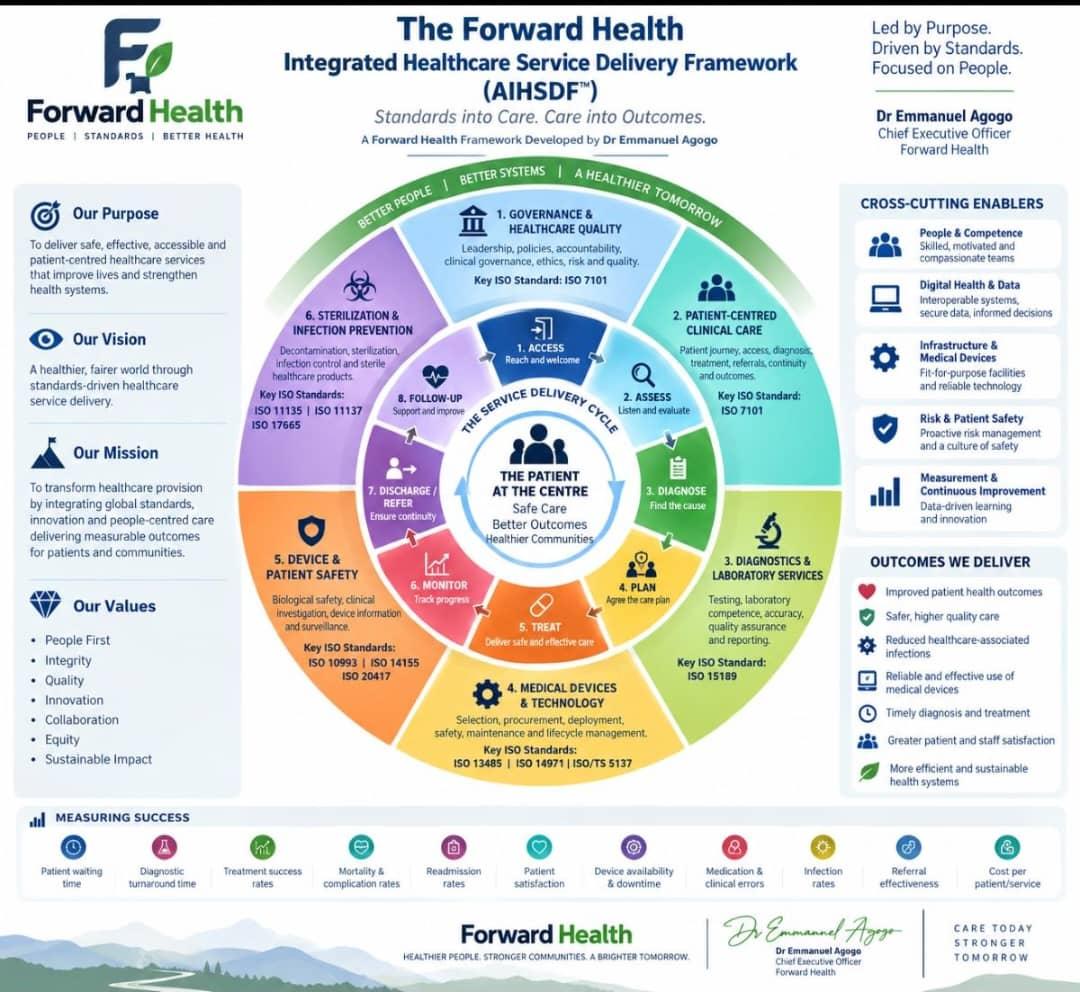


One structure for quality, from the boardroom to the bedside
Healthcare organisations face a growing list of standards, each written for a different part of the system. On their own, they can feel far removed from what happens to patients.
The AIHSDF™ brings them together. It maps each standard to a domain of care, follows the patient journey from first contact to follow-up, and measures success with indicators that patients and managers both care about.
- Led by purposeEvery requirement is tied to a better result for patients.
- Driven by standardsBuilt on international standards, not a proprietary checklist.
- Focused on peopleDesigned for the teams who deliver care and the people who receive it.
Six domains of care
Select a domain on the wheel or in the list to see what it covers, the standards behind it and how progress is measured.

Domain 1
Governance and healthcare quality
Leadership, policies and accountability that make quality everyone’s job.
What we look at
- Leadership and accountability
- Clinical governance and ethics
- Policies and procedures
- Risk and quality management
Standards it draws on
- ISO 7101Quality management systems for healthcare organisations
Example indicators
- Medication and clinical errors
- Patient satisfaction
- Cost per patient or service

Domain 2
Patient-centred clinical care
The patient’s journey from first contact to follow-up, organised around their needs.
What we look at
- Access and waiting times
- Diagnosis and treatment pathways
- Referrals and continuity of care
- Outcomes that matter to patients
Standards it draws on
- ISO 7101Quality management systems for healthcare organisations
Example indicators
- Patient waiting time
- Treatment success rates
- Readmission rates
- Referral effectiveness
Domain 3
Diagnostics and laboratory services
Accurate, timely results that clinicians and patients can trust.
What we look at
- Testing processes
- Laboratory competence
- Quality assurance
- Reporting of results
Standards it draws on
- ISO 15189Medical laboratories: requirements for quality and competence
Example indicators
- Diagnostic turnaround time
- Treatment success rates
Domain 4
Medical devices and technology
The right equipment, bought well, kept working and used safely.
What we look at
- Selection and procurement
- Deployment and training
- Maintenance
- Lifecycle management
Standards it draws on
- ISO 13485Quality management systems for medical devices
- ISO 14971Risk management for medical devices
- ISO/TS 5137Medical device maintenance management in healthcare organisations
Example indicators
- Device availability and downtime
- Cost per patient or service
Domain 5
Device and patient safety
Making sure the devices that touch patients are safe and well understood.
What we look at
- Biological safety
- Clinical investigation
- Device information and labelling
- Surveillance after devices are in use
Standards it draws on
- ISO 10993Biological evaluation of medical devices
- ISO 14155Clinical investigation of medical devices in human subjects
- ISO 20417Information supplied by the manufacturer
Example indicators
- Medication and clinical errors
- Mortality and complication rates
Domain 6
Sterilisation and infection prevention
Preventing infections through clean processes and sterile products.
What we look at
- Decontamination
- Sterilisation processes
- Infection control
- Sterile healthcare products
Standards it draws on
- ISO 11135Sterilisation using ethylene oxide
- ISO 11137Sterilisation using radiation
- ISO 17665Sterilisation using moist heat
Example indicators
- Infection rates
- Mortality and complication rates
The patient journey at the centre
At the heart of the framework is an eight-stage service delivery cycle. Each domain is judged by how well it supports the patient at every stage, and follow-up feeds straight back into better access.
- AccessReach and welcome
- AssessListen and evaluate
- DiagnoseFind the cause
- PlanAgree the care plan
- TreatDeliver safe, effective care
- MonitorTrack progress
- Discharge or referEnsure continuity
- Follow upSupport and improve
Five enablers that hold it together
These cut across every domain. Without them, even well-written policies struggle to change care.
People and competence
Skilled, motivated and compassionate teams.
Digital health and data
Interoperable systems, secure data and informed decisions.
Infrastructure and medical devices
Fit-for-purpose facilities and reliable technology.
Risk and patient safety
Proactive risk management and a culture of safety.
Measurement and continuous improvement
Data-driven learning and innovation.
From standards to impact
The framework follows a clear chain from what goes in to what changes for people, governed by quality management and risk management in line with ISO 7101.
- InputsStandards, expertise and resources
- ActivitiesTraining, advisory and implementation
- OutputsCapacity, systems and solutions
- OutcomesBetter services and improved performance
- ImpactHealthier people and stronger communities
The improvement loop
Every engagement runs through six repeating steps, so improvement continues after the first report.
- Plan
Set strategy and design around the standard and the patient journey.
- Deliver
Put the plan into practice with the people who provide care.
- Monitor
Track data and indicators as work happens.
- Evaluate
Judge effectiveness and impact against agreed goals.
- Account
Report transparently to leaders, funders and communities.
- Learn
Feed lessons back into the next plan.
Aligned with the Sustainable Development Goals and Universal Health Coverage.
How we measure success
Eleven indicators track whether care is getting better. Together they cover speed, safety, effectiveness, experience and cost.
Outcomes the framework is designed to improve
- Improved patient health outcomes
- Safer, higher quality care
- Fewer healthcare-associated infections
- Reliable and effective use of medical devices
- Timely diagnosis and treatment
- Greater patient and staff satisfaction
- More efficient, sustainable health systems
- Patient waiting time
- Diagnostic turnaround time
- Treatment success rates
- Mortality and complication rates
- Readmission rates
- Patient satisfaction
- Device availability and downtime
- Medication and clinical errors
- Infection rates
- Referral effectiveness
- Cost per patient or service
The standards behind the framework
Eleven international standards, each mapped to the domain of care it supports. Titles are summarised.
| Standard | What it covers | Domain |
|---|---|---|
| ISO 7101 | Quality management systems for healthcare organisations | Governance and healthcare qualityPatient-centred clinical care |
| ISO 15189 | Medical laboratories: requirements for quality and competence | Diagnostics and laboratory services |
| ISO 13485 | Quality management systems for medical devices | Medical devices and technology |
| ISO 14971 | Risk management for medical devices | Medical devices and technology |
| ISO/TS 5137 | Medical device maintenance management in healthcare organisations | Medical devices and technology |
| ISO 10993 | Biological evaluation of medical devices | Device and patient safety |
| ISO 14155 | Clinical investigation of medical devices in human subjects | Device and patient safety |
| ISO 20417 | Information supplied by the manufacturer | Device and patient safety |
| ISO 11135 | Sterilisation using ethylene oxide | Sterilisation and infection prevention |
| ISO 11137 | Sterilisation using radiation | Sterilisation and infection prevention |
| ISO 17665 | Sterilisation using moist heat | Sterilisation and infection prevention |
Forward Health is not a certification body. We help organisations prepare; independent, accredited bodies carry out certification.
Put the framework to work
Our healthcare quality and standards service uses the AIHSDF™ to help organisations improve, starting with ISO 7101.
- Readiness assessmentSee where you stand against ISO 7101 and what to fix first.
- Improvement supportPut your roadmap into practice, domain by domain.
- TrainingHelp your teams understand and apply the standards.
See how your organisation measures up
Start with a 30-minute introductory call about the framework and an ISO 7101 readiness assessment.